Choosing the Right Subsonic Ammunition
Posted by Tyler Marcos on 2nd Nov 2026
With recent changes to US law and enforcement policies, we have seen an explosion in the popularity of rimfire suppressor use for recreation, training, hunting, and more. This is a change we are happy to see. With any change, however, there comes a need to tackle some new information, and we are seeing a lot of chatter about— and our Customer Service team is fielding a lot of interesting questions around—ammo recommendations, ammo compatibility, etc.
To start off with a quick note, we will be using some different products and services for the purpose of demonstration. These are not affiliated with TANDEMKROSS. We also want to point out that wearing hearing protection is still recommended regardless of ammunition type. As we will get into later, a shot can still be harmfully loud even with a silencer, and impacts on steel or other targets can be loud enough to cause damage even if the shot is quiet. Finally, we are the rimfire people, so we will limit conversation to rimfire applications.
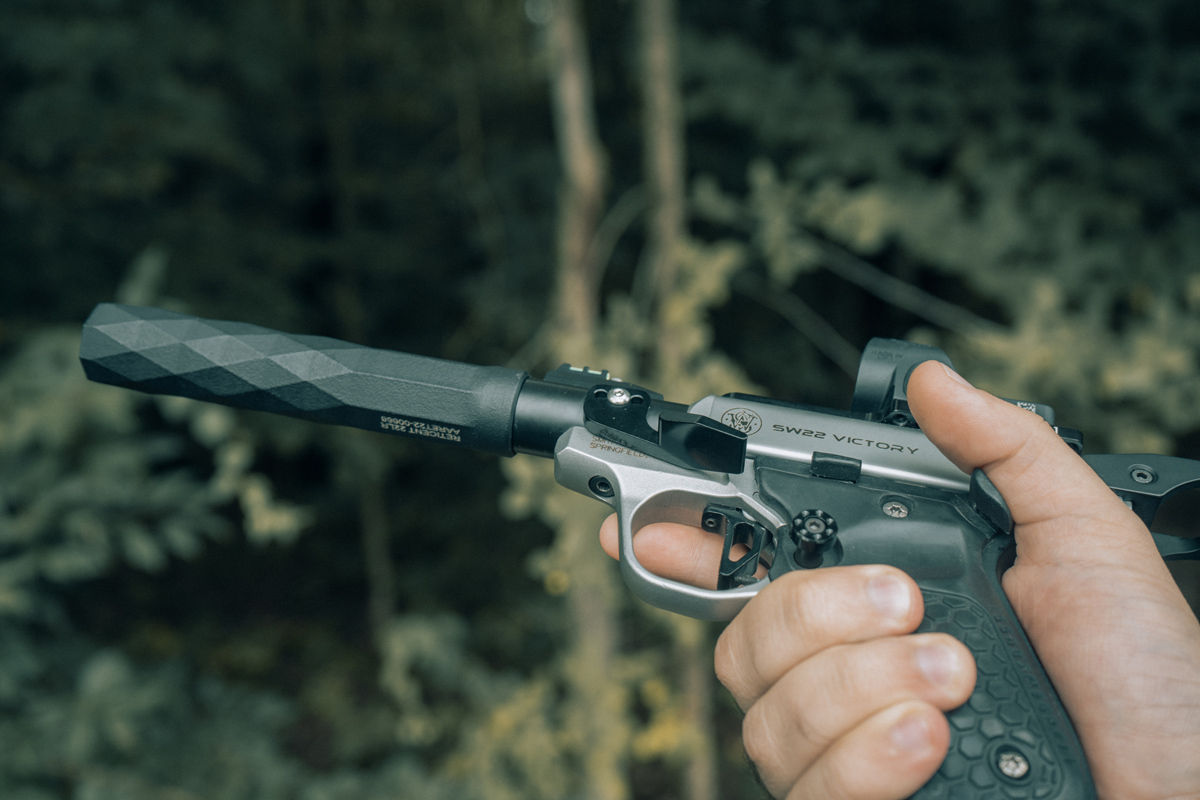
With all that being said, why not just thread on a can and call it a day? In other words, how or what does ammo selection change about your shooting experience with a suppressed .22? While the suppressor on the end of your muzzle is functioning the same regardless, ammo makes a substantial difference! Ammunition that is supersonic in your gun (we will get back to this later) will still have a loud CRACK downrange of the bullet breaking the sound barrier. If your goal is being quiet, this is a deal-breaker. Fortunately, there are several ways to fix this.
The option that most people are aware of is special-purpose subsonic ammo. In simple terms, these loads are engineered to throw a bullet downrange below the sound barrier. The way this result is achieved, however, is a very relevant factor in conjunction with the gun you are using. Two seemingly similar loads, CCI Quiet-22 and CCI Quiet-22 Semi-Auto, highlight this difference quite well.
Looking at CCI Quiet-22, you will see that this is a standard weight 40 grain bullet moving at a rated 710 feet per second. This is well below the speed of sound at nearly any elevation. In very simple terms, this load works by reducing the muzzle energy by approximately 58%. Since there is less energy being put into the system, to both accelerate the bullet down the bore and push against the bolt, this loading would not be expected to reliably cycle a standard semi-automatic. For bolt-, pump-, or lever-action guns, this would not make a difference in terms of cycling. Contrasting this, CCI Quiet-22 Semi-auto offers a different solution. This loading is a 45 grain bullet rated at 835 feet per second. This loading offers a much more similar energy input to the firearm, so it will cycle the action on most semi-auto firearms while staying subsonic because of the heavier bullet. In short, not all subsonic ammunition is made the same way, and this difference can be very important depending on the type of gun you are using. If you are unsure if a loading will work in your gun, refer to manufacturer resources or contact the gun and ammo makers to be certain.
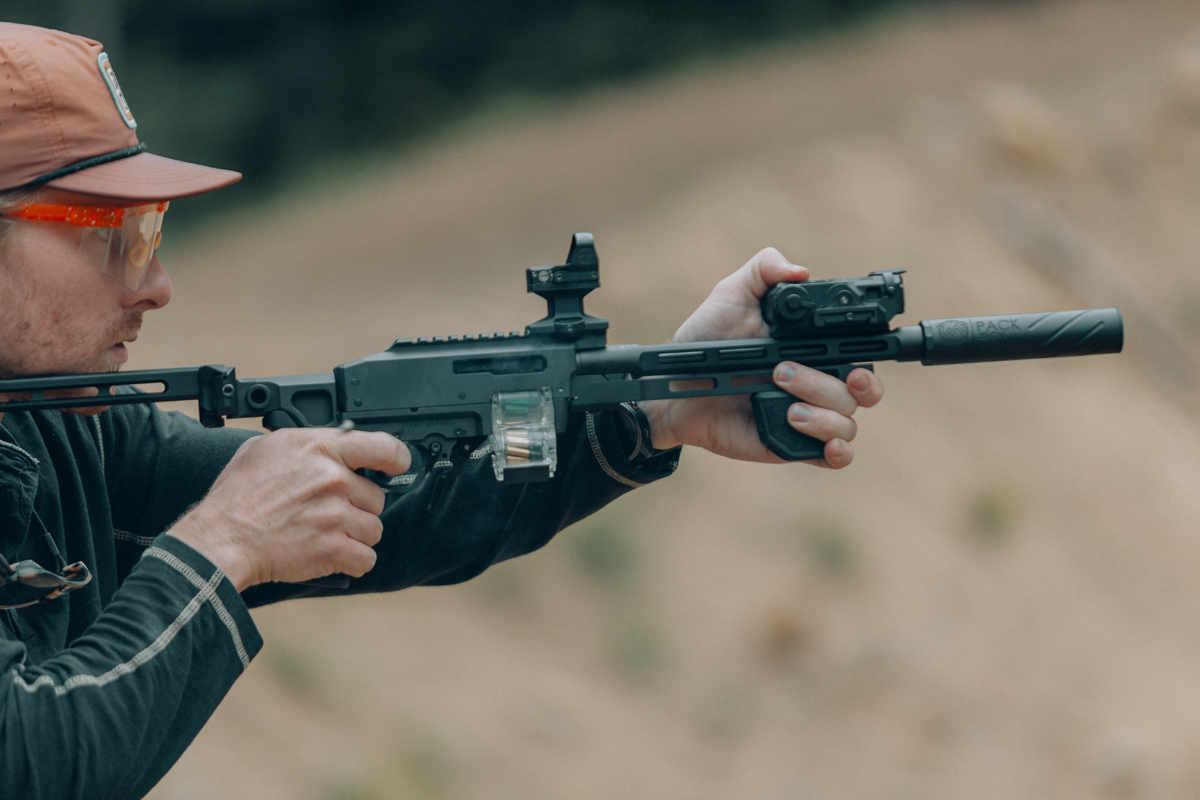
Right now, some of the largest limitations on subsonic ammo are cost and availability. Hopefully, these will be solved in time as the demand increases, but what if you could side-step the need completely? In certain circumstances, standard velocity 22 Long Rifle will operate below the sound barrier. In order to understand this, we need to discuss the speed of sound and actual muzzle velocity versus the number on an ammo box.
The speed of sound is not a universal number. It depends on air density, which is primarily dependent on air temperature. Knowing the lowest expected speed of sound in the areas that you shoot in will be very useful and could quite possibly save you a good bit of money. The National Weather Service hosts a handy calculator here.
Muzzle velocity is not as simple to determine and will require some equipment, but it is worth your time. The velocity on the box of ammo you buy is based on data pulled from a test rig in a laboratory. Some ammo brands are great about providing the testing criteria so that you have a sense of how accurately those numbers may match your real results, but this is not universal. Barrel length, temperature, and gun-to-gun variation mean that the number on the package can be helpful, but not definitive. Vortex has an outstanding short video demonstrating these principles in the real world and how a chronograph like the Garmin Xero® is the way to conclusively determine the speed of a load out of your gun. If you do not have access to a chrono, online data like the Ballistics By The Inch archive is a helpful resource for a few common loads. Shorter barrels will produce a slower shot, and short barrels like our Comet Barrel for SW22 VICTORY are specifically designed to make standard velocity or even 36gr bulk ammo shoot under the speed of sound. If a load out of a particular gun reliably shoots under the speed of sound within your temperature range, then you can use this ammo with confidence that you will not have a supersonic crack, and you can enjoy quieter shooting without spending the premium for sub-sonic ammunition.
As a short recap:
- Not all subsonic ammo will cycle in all guns. Confirm with the manufacturer
- Standard velocity ammo can be used subsonically if its speed out of your gun is less than the speed of sound.
We hope you have found this information useful to your shooting endeavors! Happy shooting from all of us at TANDEMKROSS.
Tyler M.
Director of Customer Experience / Product Manager